Why Buy Frozen Gurnard?
Frozen Gurnard works because freezing turns a delicate, time-sensitive fish into a controlled, repeatable ingredient you can actually plan around. Instead of buying on hope (“How fresh is this really?”), you’re buying on labels: cut, weight band, and consistency.
Freezing is a quality-control advantage. You can portion what you need, keep the rest sealed, and reduce waste that comes from chasing “use it today” deadlines. It also makes cooking outcomes easier to repeat, because you’re starting from known weights and formats rather than whatever the counter had left at the end of the day.
Fresh and frozen aren’t enemies — they’re different timelines. “Fresh” can still spend days moving through landing, transport, handling, and chilled display. Frozen draws a line in the sand: the fish is processed, packed, and frozen at a defined point in time, so the texture and eating quality are locked in for later. On our own site, we state that fish is filleted, packed, and frozen within 3 hours of being caught [S1]. That’s the logic: shorten the clock, then stop it.
- Freezing slows spoilage.
- Portions reduce waste.
- Consistent weights improve repeatability.
- Sealed packs reduce air exposure.
For buyers, the win is simple: Frozen Gurnard gives you flexibility without roulette — reliable stock in the freezer, predictable portions, and fewer “we should’ve used that yesterday” moments.
Choose Your Cut
Fillets
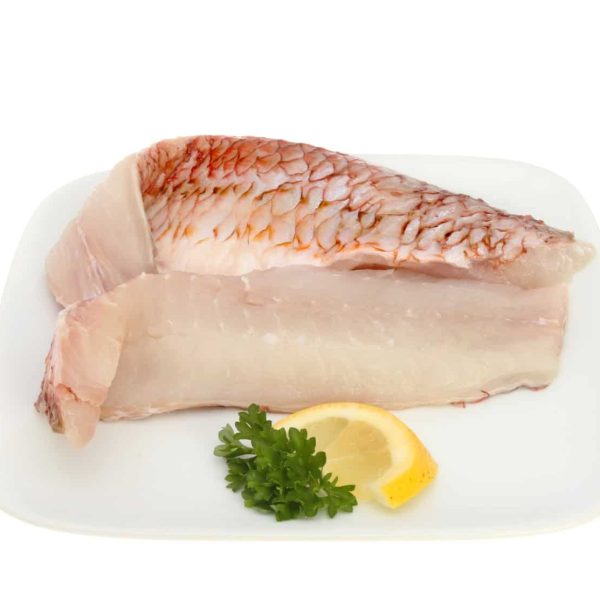
Fillets are the all-rounder: neat, versatile, and easy to match to whatever you’re cooking tonight. They suit oven dishes and pan cooking, and they’re the most “midweek-friendly” option when you want a clean, quick portion of firm white fish without extra prep. Depending on the pack, you may see skin-on or skinless fillets; skin-on tends to give a slightly more robust finish, while skinless is pure convenience. Expect natural variation in thickness from the thick end to the tail end — that’s normal, and it’s why fillets work across lots of styles.
Portions
Portions are the choice for speed and predictability. You’re buying portion control and consistent sizing, which makes it easier to plan plates and avoid odd leftovers. Portions are also ideal when you want a clean yield with minimal trim, because the work of portioning has already been done. If you’re feeding different appetites, portions make it simple to scale up or down without overthinking.
Steaks
Steaks are cut across the fish (a classic cross-cut), typically bone-in, and that structure helps them hold shape. If you like grilling or a hot pan, steaks tend to be more tolerant of higher heat than thinner fillets because they’re thicker and more self-supporting. The trade-off is you’ll navigate the bone line as you eat — a plus for some, not for others — but the payoff is a chunkier, more substantial bite.
Whole side or large fillet
A whole side (or large fillet) is for people who like control: entertaining, batch prep, or slicing your own portions to match your menu. It’s also a strong pick if you’re thinking about smoking or serving bigger, centre-cut pieces. You decide the portion size, the shape, and how much trim you want to remove.
Whole fish and speciality lines
Whole gutted Gurnard is for confident hands who want to prep it themselves: roasting, breaking down into cuts, or slicing into smaller sections with a fillet knife. It’s the most flexible format if you like doing your own butchery and managing pin bones. If you see speciality items like smoked/cured lines or sashimi-style cuts, treat them as “ready for specific uses” — designed for particular dishes, with the format doing the work for you.
Pick the cut that matches your pan, your timing, and your appetite.
What Arrives at Your Door
When you order Frozen Gurnard from frozenfish.direct, the whole point is that it arrives as a frozen product — not “nearly frozen” and not relying on luck. Your parcel is dispatched by DPD overnight courier and it’s packed with dry ice in a polystyrene insulated box, which matters because insulation slows heat gain while the dry ice provides active cooling. Together, that combination helps keep the fish frozen during transit, even when the outside temperature and depot handling aren’t doing you any favours.
To keep expectations realistic and avoid the usual courier-date confusion, delivery timing is handled in a controlled way. Orders placed before the stated cut-off are prepared for next working day delivery on eligible days. Instead of guessing, you’ll see the valid options at checkout — the calendar there controls which delivery dates are available based on when you’re ordering, the working-day schedule, and what’s currently eligible. That approach keeps the promise accurate without pretending every day behaves the same way.
When it arrives, the first few minutes are simple: open the box promptly, check your items, and move the fish straight into your freezer. If you’re planning to use it soon, follow the storage and handling guidance on the pack for the specific product you’ve bought — that’s where the most accurate information lives for that cut and format.
Dry ice is normal in cold-chain shipping, and it’s easy to handle with calm common sense. Avoid direct skin contact, keep the area ventilated, and don’t seal dry ice into an airtight container. Keep it well away from children and pets, and let any remaining dry ice dissipate naturally in a ventilated space.
This is cold-chain delivery done the boring, reliable way — so your Gurnard turns up properly frozen, ready for your freezer.
Label-First Transparency
Buying fish online only feels risky when the details are fuzzy. Here, the product cards and product pages are built to be read like a spec sheet you can actually use. Every Frozen Gurnard line shows the practical fields that matter at checkout and at the pan: the cut (fillet, portion, steak, whole fish), the weight or pack size, and — where it applies — whether it’s skin-on or skinless, and boneless or pin-boned. If a format naturally includes bones (whole fish, some steaks), that’s made clear so you’re not guessing after it lands in your kitchen.
You’ll also see whether the fish is wild or farmed where that distinction is relevant and meaningful for the item. And when origin or catch area can vary between batches or suppliers, it’s treated the right way: it’s shown on the product details for that specific product, rather than making a sweeping category promise that can’t stay true across every line. That keeps your buying decision grounded in what you’re actually receiving.
Allergen clarity is handled in the same no-drama way. Fish is clearly flagged as an allergen. For any smoked, cured, or speciality products, the ingredients list is presented on the product details so you can see exactly what’s been added — and what hasn’t.
- Cut drives cooking. Weight drives timing. Skin drives texture. Bones drive prep.
- Origin informs preference. Method informs fat level. Pack size informs value.
The result is simple: you can choose Frozen Gurnard the same way you would at a counter — by reading the label, matching the cut to your plan, and knowing what you’re paying for before you click.
Storage and Defrosting
Frozen Gurnard is at its best when you treat it like a properly kept ingredient, not a panic project. The rule is boring but powerful: keep it frozen until you actually need it, and protect it from air. Air exposure is what drives freezer burn — those dry, dull patches that make fish eat “watery” in one bite and oddly tough in the next. If you’ve got a vac packed pack, keep it sealed until defrosting. If you’ve opened a pack and aren’t using it all, get the remaining fish wrapped tight with as little trapped air as possible, then back into the freezer quickly. A small habit that pays off: rotate your stock — older packs forward, new packs behind — so nothing gets forgotten at the back until it’s lost its sparkle.
For defrosting, think in a simple hierarchy. Fridge defrost is the default because it’s gentle on texture and easy to keep tidy. Keep the fish contained (still in its pack if appropriate, or in a covered dish) so you can manage drip loss instead of letting it wander around the fridge. When it’s thawed, open it, drain any liquid, and pat dry. That one step is the difference between a clean sear and a surface that steams, turns “soft,” and refuses to colour.
If you’re working with skin-on gurnard, pat the skin especially well — dry skin crisps, wet skin sulks. If it’s listed as pin-boned, you can cook with confidence; if not, assume you may want to check for the odd pin bone before serving. Gurnard is generally a firm-flaking fish when handled well, but any fish can go a bit “watery” if it thaws in a puddle or hits heat while still damp.
On refreezing: keep it conservative. If the fish has been properly defrosted in the fridge and kept clean and cold, some people do refreeze — but quality usually drops, and safety depends on handling. If in doubt, don’t refreeze, and always follow the on-pack instructions for that specific product. The simplest win is to buy what’s genuinely portionable for your plan, thaw only what you need, and keep the rest sealed and protected.
Cooking Outcomes
Crisp skin (skin-on)
Start with a properly dried surface — moisture is the enemy of crackle. Heat a pan until it means business, add a thin film of oil, then lay the skin-on gurnard down and leave it alone so the skin can grip, render, and crisp instead of tearing and sticking. You’re looking for a steady sizzle and a skin that turns visibly flatter and more “lacquered” at the edges, with the flesh turning from translucent to opaque as the heat climbs. When the skin is crisp, finish gently so the centre stays juicy rather than tightening into that dry, chalky flake. Dry surface equals better sear. Gentle finish protects moisture. Resting evens temperature.
Oven-roast fillet
Oven-roasting is the “repeatable result” method when you want a clean, even cook without drama. Place the fillet so the thicker end gets the most heat, then cook until the flesh looks opaque and separates into moist flakes when nudged, not shredded flakes when forced. The giveaway that it’s gone too far is a dull, dry look and a texture that turns stringy rather than tender. If you want a touch of colour, you can start with a quick pan contact and move to the oven to finish without drying the outside. Thickness changes timing. Fat content changes forgiveness. Skin changes crisp.
Pan-fry portions
Portions reward restraint: use gentle heat, aim for controlled browning, and stop before the fish tightens. Watch the sides — as the heat travels inward you’ll see the opaque band creep up; when it’s almost there, you’re in the “finish zone,” not the “keep going” zone. Flip once, keep movements minimal, and judge doneness by feel: the fish should spring back lightly and flake cleanly, not crumble or leak cloudy moisture. Take it off the heat slightly early and rest briefly so the centre settles and stays juicy.
Grill steaks
Steaks are built for more aggression: they hold shape, tolerate higher heat, and give you that grill-ready surface without instantly falling apart. Sear hard enough to mark and colour, then watch the edges — when they turn opaque and the surface looks set, you’re close. The centre should stay juicy and slightly resilient; if it feels stiff all the way through, you’ve pushed past the sweet spot. Use direct heat for colour and a gentler finish to protect moisture, especially on thicker cuts.
Cured, smoked, and sashimi-style gurnard products have different handling expectations — follow the product details for the intended use and prep.
Nutrition Snapshot
Gurnard is a protein-rich, lean white fish with a clean flavour and firm flakes when it’s cooked with care. If you’re buying it for straightforward “real food” meals, it fits neatly into a balanced diet: satisfying, versatile, and easy to portion without the heavy richness some fish carry.
Fish is often linked with omega-3 fats, but it’s worth being precise. Gurnard is typically not classed as one of the classic “oily fish” (think salmon, mackerel, sardines) because it’s comparatively low in fat. Even so, plain gurnard can still contribute some omega-3s — and the exact amount will vary by species, cut, and preparation. The nutrition panel on each product page is the right place to check the numbers for that specific pack, rather than assuming a category-wide value.
Nutrients also vary by whether a product is wild or farmed (where applicable), and by practical factors like skin-on versus skinless, and boneless versus pin-boned. Those details matter because they affect both eating and cooking: skin can add texture and help protect the flesh, while leaner cuts tend to cook quickly and can go dry if they’re pushed too hard.
As a simple buying lens: if you want a lighter white fish for the week, gurnard’s lean profile and high protein make it an easy “no-drama” choice. If you want a richer, higher-fat fish for a more forgiving cook, you may prefer one of the classic oily species instead. Either way, check the product details, choose the cut you’ll enjoy cooking, and you’ll get the outcome you’re paying for.
Provenance and Responsible Sourcing
With fish, the details matter — and they rarely stay identical across every pack in a category. That’s why we keep provenance SKU-level, not slogan-level. We show method and origin details per product so you can choose what fits your preferences. If something can’t be guaranteed across every item, we don’t pretend it can.
On each Frozen Gurnard product, you’ll typically see the practical provenance fields that help you decide: whether it’s wild or farmed (where applicable), the origin and/or catch area when supplied, and the method information when it’s available from the supply chain. For speciality lines like smoked or cured gurnard, the ingredients and processing notes are listed on that specific product, because those details can change the eating experience (and how you plan to use it).
This category can include a mix depending on what’s stocked at the time: gurnard fillets, portioned formats, and wild gurnard items where available — and in some supply situations, farmed lines may appear alongside wild-caught options. Availability can shift with season, landings, and processing runs, so the most reliable truth is always what’s shown on the individual product details.
Provenance supports preference. Clear labels support trust. Evidence supports claims.
Origin informs choice. Method informs expectations. Ingredients inform suitability.
If you already know what you care about — wild versus farmed, specific origins, or a preference for a smoked/cured format — the product details make that decision simple and checkable.
Frequently Asked Questions
Is frozen gurnard as good as fresh?
Frozen Gurnard can be every bit as satisfying as “fresh” — but it helps to compare the right things. “Freshness” is really about time and handling: how quickly the fish is chilled, how long it sits in the supply chain, and how well it’s protected from air, temperature swings, and rough treatment. Frozen is a different promise: it’s about locking in a point in time so you’re not gambling on how many days of travel and storage happened before it reached you.
Texture and flavour are where people notice the difference, so it’s worth being blunt. Freezing can affect moisture if fish is mishandled — for example, if it’s exposed to air (freezer burn), allowed to partially thaw and refreeze, or defrosted too fast so it loses more drip. But when the cold chain is tight, the packaging is solid, and you defrost with a bit of care, frozen gurnard stays clean-tasting, sweet, and properly flaky, not watery or tired.
That’s also why our operating model matters. Frozenfish.direct is built around controlled handling: gurnard is processed and frozen within hours, then shipped with dry ice in insulated packaging designed to keep it frozen in transit. In other words, you’re buying consistency — not just fish, but a system that protects it from “warm moments” that wreck texture.
Choosing frozen also lets you buy by outcome, not by hope:
- Portions are the midweek hero: predictable sizing, quick to plan around, and easy to cook without overthinking.
- Steaks are the grilling choice: they hold their shape better and tolerate higher heat, so you can chase colour without the fish falling apart.
- Large fillet/whole side is the entertaining option: ideal when you want one impressive piece you can roast, slice, or portion yourself.
Fresh can be brilliant, and frozen can be brilliant — they’re just brilliant in different ways. If you want predictable results, frozen is the easier way to make Gurnard a routine.
How do I defrost frozen gurnard without it going watery?
“Watery” gurnard is almost always a defrosting problem, not a fish problem. When fish freezes, the water inside it forms ice crystals. If the freeze/thaw cycle is rough — too warm, too fast, or repeated — those crystals and cell damage mean more moisture escapes as it thaws. That escaped moisture is drip loss, and it’s what turns a fillet soft, pale, and a bit steamed instead of flaky and firm. The other big culprits are defrosting on the counter (outer layers warm while the centre stays icy) and any partial thaw/refreeze cycle, which makes texture degrade fast.
The most reliable flow is simple and boring — and boring is good in food safety and texture control. Defrost in the fridge as your default. Keep the fish contained so any drip can’t spread: a tray, a rimmed plate, or a shallow dish is plenty. If it’s vac packed, keep the packaging intact while it defrosts (unless the on-pack guidance says otherwise) because the sealed pack helps limit air exposure and keeps the surface from drying out or picking up fridge odours. Once thawed, open the pack, drain any liquid, and pat dry with kitchen paper. That last step matters more than people think: a dry surface sears better, crisps better, and tastes cleaner.
A few tips by cut help you avoid surprises:
- Portions are the easiest. Their uniform thickness defrosts more evenly, so you get less “half-thawed edge, icy middle” drama and more consistent firmness.
- Thick fillets / large fillets / whole sides need more patience. Because the centre holds cold longer, rushing them encourages a warm outside and a wet finish. Keep them flat in the fridge, stay contained, and let the cut thaw evenly according to the on-pack guidance.
- Steaks behave differently because of their shape and structure. They’re often more forgiving in cooking, but they still benefit from a careful fridge defrost and a proper pat dry so the surface browns instead of turning slippery.
If you’re short on time, cooking from frozen can work as a backup — it’s usually better with thinner pieces and gentler methods where the centre can come up to doneness without the outside overcooking. But for the best texture and cleanest flake, fridge defrost wins.
Good defrosting is texture control.
Wild vs farmed gurnard — what should I choose?
Wild vs farmed gurnard isn’t a “good vs bad” decision. Both can be excellent — it’s really about what you like, how you cook, and how predictable you want the result to be. Think of it like choosing tomatoes: some people want the punchy, variable character of wild; others want the steady, repeatable performance that farmed can offer.
Here are the typical differences you’ll notice — with the important caveat that species, season, feed, and handling all matter, so these are “often” patterns, not laws of physics.
Flavour and intensity: Wild gurnard may taste a bit more assertive or “sea-forward,” with flavour that can vary more by catch area and time of year. Farmed gurnard may be slightly milder and more consistent from pack to pack, which is handy if you’re building a reliable midweek rotation.
Firmness and texture: Wild fish may feel a touch firmer and leaner, while farmed fish may be a little softer with a more even texture. Neither is automatically better — it depends whether you’re chasing a clean flake or a slightly richer bite.
Fat level and forgiveness: As a general rule, fattier fish is more forgiving (it stays juicy and tolerates higher heat), while leaner fish shows mistakes faster (it can dry out if you push it). If a gurnard item is leaner, it benefits from gentler cooking and a bit of support — butter, olive oil, a sauce, or a moist cooking method. If it’s fattier, it can be great for higher heat approaches like grilling or a hotter pan finish because the extra fat helps protect moisture.
Consistency and price: Farmed fish is often more consistent in sizing and availability, and that can affect price stability. Wild fish can vary more in size and supply, which can show up in both pack variation and price.
On frozenfish.direct, the simplest way to decide is to use the information you can actually verify: the product details tell you whether an item is wild or farmed and where it comes from. You’ll also see the cut (gurnard fillets, portions, steaks, or whole fish where stocked), which matters just as much as origin for cooking outcomes.
Buyer’s shortcut: Choose by cooking method first, then by origin and method.
Which gurnard cut should I buy for my plan?
Which gurnard cut you should buy comes down to one simple idea: match the cut to the outcome you want, not the other way around. In practice, two levers drive most of that outcome: thickness and skin. Thickness controls how forgiving the fish is (thin cooks fast and can overcook quickly; thick stays juicier but needs a steadier approach). Skin controls texture (skin-on can go crisp and protect the flesh; skinless is simpler and more neutral for sauces and quick pan work).
Here’s the clean mapping from “plan” to “cut”:
Weeknight meals (fast, predictable): Go for portions or skinless fillets. Portions are the low-friction choice because they’re portionable, consistent in size, and easy to cook evenly. Skinless fillets are ideal when you want a quick pan finish or an oven bake with a sauce — minimal fuss, maximum repeatability.
Grilling (heat, char, structure): Choose steaks, or skin-on cuts where available. Steaks hold their shape better and generally tolerate higher heat because they’re thicker and have more structure. Skin-on can add that “crispy edge” bonus, but thickness still matters: thinner pieces need a quicker, gentler grill zone; thicker steaks can take a stronger sear then a calmer finish.
Entertaining (centre-of-table, carve-your-own): Pick a whole side / large fillet. This gives you presence on the plate, more control over portion size, and a cleaner serve for guests. It’s also ideal for batch prep: slice into your own portions after cooking, or portion raw for planned meals later (following on-pack guidance).
Prep-it-yourself (hands-on, flexible): Go for whole gutted gurnard. This is for people who want control over cuts and don’t mind doing the work — breaking down, slicing, roasting whole, or taking off fillets yourself. It’s also the best route if you like using frames for stock.
Special occasions (ready for specific uses): Consider smoked/cured lines where stocked. These are “use-case ready” products: less about cooking technique and more about serving, plating, and pairing.
If you only buy one thing: choose gurnard portions. They’re the easiest path to predictable results, whether you’re cooking for one, feeding a family, or trying gurnard for the first time.
Pick the cut that matches your heat source and your timing.
Can I cook gurnard from frozen?
Yes — often you can cook gurnard from frozen, but the method matters more than it does with a fully defrosted piece.
The two things working against you are thickness and surface moisture. A frozen fillet or portion usually has a thin glaze of ice (or frost) on the outside. If you drop that straight into a ripping-hot pan, the surface melts into water, the pan temperature crashes, and you end up steaming instead of searing. Thicker pieces add a second problem: the outside can look “done” while the centre is still catching up. That’s why oven cooking, air-frying, or a covered pan is often more forgiving than chasing a perfect high-heat sear from the first second.
A safe, practical approach is simple. Remove all packaging first (never cook in the wrap). If there’s visible surface ice, rinse it off quickly under cold running water, then pat the fish really dry with kitchen paper — especially if it’s skin-on. Start with gentler heat so the centre has time to warm through without the outside drying out. Once the fish is mostly cooked and the surface looks dry again, finish hotter to bring back colour and texture. Think “warm through first, crisp up last.” Follow the on-pack cooking guidance where provided, and adjust to the thickness in front of you.
When should you not cook from frozen? If you’ve got a very thick piece and you’re aiming for a perfect, restaurant-style sear, defrosting first gives you far better control. The same goes for skin-on cuts if crisp skin is the whole point — you’ll get a cleaner, crunchier result with a properly dried, fully defrosted surface. And for speciality products (cured, smoked, or sashimi-style cuts), don’t freestyle: follow the product guidance, because they’re made for specific handling and serving.
Frozen-to-oven is the weeknight cheat code when you need Gurnard now.
How long does frozen gurnard last, and how do I avoid freezer burn?
Yes — often you can cook gurnard from frozen, but the method matters more than it does with a fully defrosted piece.
The two things working against you are thickness and surface moisture. A frozen fillet or portion usually has a thin glaze of ice (or frost) on the outside. If you drop that straight into a ripping-hot pan, the surface melts into water, the pan temperature crashes, and you end up steaming instead of searing. Thicker pieces add a second problem: the outside can look “done” while the centre is still catching up. That’s why oven cooking, air-frying, or a covered pan is often more forgiving than chasing a perfect high-heat sear from the first second.
A safe, practical approach is simple. Remove all packaging first (never cook in the wrap). If there’s visible surface ice, rinse it off quickly under cold running water, then pat the fish really dry with kitchen paper — especially if it’s skin-on. Start with gentler heat so the centre has time to warm through without the outside drying out. Once the fish is mostly cooked and the surface looks dry again, finish hotter to bring back colour and texture. Think “warm through first, crisp up last.” Follow the on-pack cooking guidance where provided, and adjust to the thickness in front of you.
When should you not cook from frozen? If you’ve got a very thick piece and you’re aiming for a perfect, restaurant-style sear, defrosting first gives you far better control. The same goes for skin-on cuts if crisp skin is the whole point — you’ll get a cleaner, crunchier result with a properly dried, fully defrosted surface. And for speciality products (cured, smoked, or sashimi-style cuts), don’t freestyle: follow the product guidance, because they’re made for specific handling and serving.
Frozen-to-oven is the weeknight cheat code when you need Gurnard now.
{
"@context": "https://schema.org",
"@type": "FAQPage",
"@id": "https://frozenfish.direct/exotic-frozen-fish/gurnard-fillets-4-in-a-pack/#FAQPage",
"mainEntity": [{
"@type": "Question",
"name": "Is frozen gurnard as good as fresh?",
"acceptedAnswer": {
"@type": "Answer",
"text": "Frozen Gurnard can be every bit as satisfying as “fresh” — but it helps to compare the right things. “Freshness” is really about time and handling: how quickly the fish is chilled, how long it sits in the supply chain, and how well it’s protected from air, temperature swings, and rough treatment. Frozen is a different promise: it’s about locking in a point in time so you’re not gambling on how many days of travel and storage happened before it reached you.
Texture and flavour are where people notice the difference, so it’s worth being blunt. Freezing can affect moisture if fish is mishandled — for example, if it’s exposed to air (freezer burn), allowed to partially thaw and refreeze, or defrosted too fast so it loses more drip. But when the cold chain is tight, the packaging is solid, and you defrost with a bit of care, frozen gurnard stays clean-tasting, sweet, and properly flaky, not watery or tired.
That’s also why our operating model matters. Frozenfish.direct is built around controlled handling: gurnard is processed and frozen within hours, then shipped with dry ice in insulated packaging designed to keep it frozen in transit. In other words, you’re buying consistency — not just fish, but a system that protects it from “warm moments” that wreck texture.
Choosing frozen also lets you buy by outcome, not by hope:
Portions are the midweek hero: predictable sizing, quick to plan around, and easy to cook without overthinking.
Steaks are the grilling choice: they hold their shape better and tolerate higher heat, so you can chase colour without the fish falling apart.
Large fillet/whole side is the entertaining option: ideal when you want one impressive piece you can roast, slice, or portion yourself.
Fresh can be brilliant, and frozen can be brilliant — they’re just brilliant in different ways. If you want predictable results, frozen is the easier way to make Gurnard a routine."
}
}, {
"@type": "Question",
"name": "How do I defrost frozen gurnard without it going watery?",
"acceptedAnswer": {
"@type": "Answer",
"text": "“Watery” gurnard is almost always a defrosting problem, not a fish problem. When fish freezes, the water inside it forms ice crystals. If the freeze/thaw cycle is rough — too warm, too fast, or repeated — those crystals and cell damage mean more moisture escapes as it thaws. That escaped moisture is drip loss, and it’s what turns a fillet soft, pale, and a bit steamed instead of flaky and firm. The other big culprits are defrosting on the counter (outer layers warm while the centre stays icy) and any partial thaw/refreeze cycle, which makes texture degrade fast.
The most reliable flow is simple and boring — and boring is good in food safety and texture control. Defrost in the fridge as your default. Keep the fish contained so any drip can’t spread: a tray, a rimmed plate, or a shallow dish is plenty. If it’s vac packed, keep the packaging intact while it defrosts (unless the on-pack guidance says otherwise) because the sealed pack helps limit air exposure and keeps the surface from drying out or picking up fridge odours. Once thawed, open the pack, drain any liquid, and pat dry with kitchen paper. That last step matters more than people think: a dry surface sears better, crisps better, and tastes cleaner.
A few tips by cut help you avoid surprises:
Portions are the easiest. Their uniform thickness defrosts more evenly, so you get less “half-thawed edge, icy middle” drama and more consistent firmness.
Thick fillets / large fillets / whole sides need more patience. Because the centre holds cold longer, rushing them encourages a warm outside and a wet finish. Keep them flat in the fridge, stay contained, and let the cut thaw evenly according to the on-pack guidance.
Steaks behave differently because of their shape and structure. They’re often more forgiving in cooking, but they still benefit from a careful fridge defrost and a proper pat dry so the surface browns instead of turning slippery.
If you’re short on time, cooking from frozen can work as a backup — it’s usually better with thinner pieces and gentler methods where the centre can come up to doneness without the outside overcooking. But for the best texture and cleanest flake, fridge defrost wins.
Good defrosting is texture control."
}
}, {
"@type": "Question",
"name": "Wild vs farmed gurnard — what should I choose?",
"acceptedAnswer": {
"@type": "Answer",
"text": "Wild vs farmed gurnard isn’t a “good vs bad” decision. Both can be excellent — it’s really about what you like, how you cook, and how predictable you want the result to be. Think of it like choosing tomatoes: some people want the punchy, variable character of wild; others want the steady, repeatable performance that farmed can offer.
Here are the typical differences you’ll notice — with the important caveat that species, season, feed, and handling all matter, so these are “often” patterns, not laws of physics.
Flavour and intensity: Wild gurnard may taste a bit more assertive or “sea-forward,” with flavour that can vary more by catch area and time of year. Farmed gurnard may be slightly milder and more consistent from pack to pack, which is handy if you’re building a reliable midweek rotation.
Firmness and texture: Wild fish may feel a touch firmer and leaner, while farmed fish may be a little softer with a more even texture. Neither is automatically better — it depends whether you’re chasing a clean flake or a slightly richer bite.
Fat level and forgiveness: As a general rule, fattier fish is more forgiving (it stays juicy and tolerates higher heat), while leaner fish shows mistakes faster (it can dry out if you push it). If a gurnard item is leaner, it benefits from gentler cooking and a bit of support — butter, olive oil, a sauce, or a moist cooking method. If it’s fattier, it can be great for higher heat approaches like grilling or a hotter pan finish because the extra fat helps protect moisture.
Consistency and price: Farmed fish is often more consistent in sizing and availability, and that can affect price stability. Wild fish can vary more in size and supply, which can show up in both pack variation and price.
On frozenfish.direct, the simplest way to decide is to use the information you can actually verify: the product details tell you whether an item is wild or farmed and where it comes from. You’ll also see the cut (gurnard fillets, portions, steaks, or whole fish where stocked), which matters just as much as origin for cooking outcomes.
Buyer’s shortcut: Choose by cooking method first, then by origin and method."
}
}, {
"@type": "Question",
"name": "Which gurnard cut should I buy for my plan?",
"acceptedAnswer": {
"@type": "Answer",
"text": "Which gurnard cut you should buy comes down to one simple idea: match the cut to the outcome you want, not the other way around. In practice, two levers drive most of that outcome: thickness and skin. Thickness controls how forgiving the fish is (thin cooks fast and can overcook quickly; thick stays juicier but needs a steadier approach). Skin controls texture (skin-on can go crisp and protect the flesh; skinless is simpler and more neutral for sauces and quick pan work).
Here’s the clean mapping from “plan” to “cut”:
Weeknight meals (fast, predictable): Go for portions or skinless fillets. Portions are the low-friction choice because they’re portionable, consistent in size, and easy to cook evenly. Skinless fillets are ideal when you want a quick pan finish or an oven bake with a sauce — minimal fuss, maximum repeatability.
Grilling (heat, char, structure): Choose steaks, or skin-on cuts where available. Steaks hold their shape better and generally tolerate higher heat because they’re thicker and have more structure. Skin-on can add that “crispy edge” bonus, but thickness still matters: thinner pieces need a quicker, gentler grill zone; thicker steaks can take a stronger sear then a calmer finish.
Entertaining (centre-of-table, carve-your-own): Pick a whole side / large fillet. This gives you presence on the plate, more control over portion size, and a cleaner serve for guests. It’s also ideal for batch prep: slice into your own portions after cooking, or portion raw for planned meals later (following on-pack guidance).
Prep-it-yourself (hands-on, flexible): Go for whole gutted gurnard. This is for people who want control over cuts and don’t mind doing the work — breaking down, slicing, roasting whole, or taking off fillets yourself. It’s also the best route if you like using frames for stock.
Special occasions (ready for specific uses): Consider smoked/cured lines where stocked. These are “use-case ready” products: less about cooking technique and more about serving, plating, and pairing.
If you only buy one thing: choose gurnard portions. They’re the easiest path to predictable results, whether you’re cooking for one, feeding a family, or trying gurnard for the first time.
Pick the cut that matches your heat source and your timing."
}
}, {
"@type": "Question",
"name": "Can I cook gurnard from frozen?",
"acceptedAnswer": {
"@type": "Answer",
"text": "Yes — often you can cook gurnard from frozen, but the method matters more than it does with a fully defrosted piece.
The two things working against you are thickness and surface moisture. A frozen fillet or portion usually has a thin glaze of ice (or frost) on the outside. If you drop that straight into a ripping-hot pan, the surface melts into water, the pan temperature crashes, and you end up steaming instead of searing. Thicker pieces add a second problem: the outside can look “done” while the centre is still catching up. That’s why oven cooking, air-frying, or a covered pan is often more forgiving than chasing a perfect high-heat sear from the first second.
A safe, practical approach is simple. Remove all packaging first (never cook in the wrap). If there’s visible surface ice, rinse it off quickly under cold running water, then pat the fish really dry with kitchen paper — especially if it’s skin-on. Start with gentler heat so the centre has time to warm through without the outside drying out. Once the fish is mostly cooked and the surface looks dry again, finish hotter to bring back colour and texture. Think “warm through first, crisp up last.” Follow the on-pack cooking guidance where provided, and adjust to the thickness in front of you.
When should you not cook from frozen? If you’ve got a very thick piece and you’re aiming for a perfect, restaurant-style sear, defrosting first gives you far better control. The same goes for skin-on cuts if crisp skin is the whole point — you’ll get a cleaner, crunchier result with a properly dried, fully defrosted surface. And for speciality products (cured, smoked, or sashimi-style cuts), don’t freestyle: follow the product guidance, because they’re made for specific handling and serving.
Frozen-to-oven is the weeknight cheat code when you need Gurnard now."
}
}, {
"@type": "Question",
"name": "How long does frozen gurnard last, and how do I avoid freezer burn?",
"acceptedAnswer": {
"@type": "Answer",
"text": "Yes — often you can cook gurnard from frozen, but the method matters more than it does with a fully defrosted piece.
The two things working against you are thickness and surface moisture. A frozen fillet or portion usually has a thin glaze of ice (or frost) on the outside. If you drop that straight into a ripping-hot pan, the surface melts into water, the pan temperature crashes, and you end up steaming instead of searing. Thicker pieces add a second problem: the outside can look “done” while the centre is still catching up. That’s why oven cooking, air-frying, or a covered pan is often more forgiving than chasing a perfect high-heat sear from the first second.
A safe, practical approach is simple. Remove all packaging first (never cook in the wrap). If there’s visible surface ice, rinse it off quickly under cold running water, then pat the fish really dry with kitchen paper — especially if it’s skin-on. Start with gentler heat so the centre has time to warm through without the outside drying out. Once the fish is mostly cooked and the surface looks dry again, finish hotter to bring back colour and texture. Think “warm through first, crisp up last.” Follow the on-pack cooking guidance where provided, and adjust to the thickness in front of you.
When should you not cook from frozen? If you’ve got a very thick piece and you’re aiming for a perfect, restaurant-style sear, defrosting first gives you far better control. The same goes for skin-on cuts if crisp skin is the whole point — you’ll get a cleaner, crunchier result with a properly dried, fully defrosted surface. And for speciality products (cured, smoked, or sashimi-style cuts), don’t freestyle: follow the product guidance, because they’re made for specific handling and serving.
Frozen-to-oven is the weeknight cheat code when you need Gurnard now."
}
}],
"isPartOf": {
"@id": "https://frozenfish.direct/exotic-frozen-fish/gurnard-fillets-4-in-a-pack/#Article"
}
}
.centerdiv{float:none;margin:0 auto}
.sseo_faqs{counter-reset:faq-counter}
.sseo_faqs .sseo_faqcont .sseo_faqtitle{color:#ffffff!important; background:#2d7ccb!important;}
.sseo_faqs .sseo_faqcont .sseo_faqtitle:before{background:#000000!important;color:#ffffff!important;}
.sseo_faqs .sseo_faqcont .sseo_faqtitle:before{counter-increment:faq-counter;content:"Q" counter(faq-counter);position:absolute;top:0;bottom:0;left:0;width:48px;height:auto;font-size:20px;line-height:52px;text-align:center;font-family:"Aparajita", sans-serif;font-weight:600}
.sseo_faqs, .sseo_faqcont{position:relative;float:left;width:100%;margin-bottom:12px;text-align:left}
.sseo_faqs .sseo_faqtitle{font-family:inherit!important; font-weight:inherit!important;position:relative;float:left;width:100%;padding:12px 45px 12px 58px!important;cursor:pointer;font-weight:500; font-size: 20px; color:var(--main-color);}
.sseo_faqs .sseo_faqtitle:after{content:"";background:url(/wp-content/plugins/sseo_schema/inc/img/down-arrow.svg)no-repeat;background-size:20px;font-family:FontAwesome;position:absolute;top:50%;transform:translateY(-50%);right:10px;font-size:22px;line-height:32px;width:30px;height:30px;text-align:center;border-radius:100%;transition-duration:.5s;box-shadow:0px 0px 10px 0px #9e9e9e}
.sseo_faqs .sseo_faqtitle.f_open:after{line-height:28px;color:#ffffff;border:2px solid #ffffff;transform:translateY(-50%) rotate(180deg);transition-duration:.5s}
.sseo_faqs .sseo_faqdet{background:#ffffff!important; position:relative;float:left;width:100%;margin:0;padding:20px;border:1px solid#ffffff!important;border-top:none;display:none;}
.sseo_faqs .sseo_faqdet *:last-child, .sseo_faqs .sseo_faqcont:last-child{padding-bottom:0;margin-bottom:0}
.sseo_faqs .sseo_faqtitle{background:#f9f9f9}
.sseo_faqs .sseo_faqtitle{margin:0 !important}
.sseo_faqs .sseo_faqtitle:after{color:#b1b1b1;background:#ffffff}
.sseo_faqs .sseo_faqtitle.f_open:after{color:#ffffff;background:var(--main-color)}
window.onload = function(){if(jQuery(".sseo_faqs").length > 0){
jQuery(".sseo_faqs .sseo_faqcont:first-child").find(".sseo_faqtitle").addClass("f_open");
jQuery(".sseo_faqs .sseo_faqcont:first-child").find(".sseo_faqdet").slideDown();
jQuery(".sseo_faqcont .sseo_faqtitle").click(function(){
jQuery(".sseo_faqcont").find(".sseo_faqtitle").removeClass("f_open");
jQuery(".sseo_faqcont").find(".sseo_faqdet").slideUp();
var sseo_faqdet = jQuery(this).parents(".sseo_faqcont").find(".sseo_faqdet");
if(!sseo_faqdet.is(":visible")){
sseo_faqdet.slideDown();
jQuery(this).addClass("f_open");
}else{
sseo_faqdet.slideUp();
jQuery(this).removeClass("f_open");
}
});
}};