Why Buy Frozen Mackerel Fillets?
Frozen works for mackerel fillets because it turns a perishable ingredient into a controlled starting point. When fillets are frozen at the right moment, you’re not guessing how long they’ve sat in transit, in storage, or on a counter before you ever see them. You’re buying fish that has been paused at a known point in time, then kept stable until you’re ready to use it. That stability is what makes frozen mackerel fillets easier to plan around: you can portion what you need, keep the rest sealed, and cook with more repeatable results.
On frozenfish.direct, the aim is simple: reduce the “fresh but variable” problem. Fresh fish can still be excellent, but it often travels through a longer chain—landing, handling, chilled transport, distribution, retail storage—so time adds up even when everyone does their job well. Frozen locks in quality earlier and holds it there. Where stated on-site, the brand’s process is that seafood is processed and frozen within hours, and in some cases within three hours of being caught. That is the kind of claim that matters because it describes a quality-control window, not a marketing mood.
Freezing slows spoilage. Cold storage preserves texture. Vacuum packs reduce air exposure. Portions reduce waste. Consistent weights improve cooking. Frozen stock improves meal planning.
Practically, this means fewer “use it tonight or lose it” moments. It also means you can buy by cut and weight band with more confidence: the size you choose is the size you cook, and the portion you thaw is the portion you serve. Done properly, frozen isn’t a compromise—it’s a way to make oily fish simpler, steadier, and less wasteful in a real kitchen.
Choose Your Cut
Versatile fillets for oven or pan
If you want an easy default that works across the week, start with classic frozen mackerel fillets that suit both oven and pan. They’re a solid choice when you want oily fish flavour without having to overthink the format: simple seasoning, reliable texture, and a route to a fast dinner. These are the fillets that fit a Tuesday-night rhythm—hot pan for a quick sear, or a steady oven cook when you’d rather not babysit the hob.
Portion-focused packs for speed and predictable sizing
Portions are about control. Predictable sizing makes it easier to plan cooking times and side dishes, and portion control helps you defrost only what you need without turning dinner into a guessing game. If you cook for one or two, portioned pieces reduce waste and keep your choices flexible: one portion now, another later, without sacrificing consistency.
Fillets that hold shape under higher heat
Some mackerel fillets are better suited to higher heat when you want firm handling and strong surface colour. “Holds shape” matters when you’re working with a grill pan, a hot skillet, or a fast oven finish. Look for product notes that suggest a robust cut, clean trimming, and straightforward handling—those are the cues that the fillet will tolerate high heat without breaking up before you get the result you’re after.
Smoked fillets for entertaining, batch prep, and slicing your own portions
Smoked mackerel fillets are a different tool: rich, ready for cold serving, and excellent for batch prep. They suit entertaining because you can slice your own portions, build platters, and use the same pack across salads, sandwiches, and simple starters. Many smoked lines are vac packed, which supports tidy prep and consistent portioning, especially when you’re feeding a few people without wanting extra cooking steps.
Speciality mackerel items for specific uses
If you’re buying for a specific outcome—sushi-style plates, cured formats, or other speciality mackerel fillet items—treat them as purpose-built. The key is to follow what the product description says about intended use, cut format, and prep style, rather than assuming every fillet behaves the same.
Pick the Mackerel Fillets that match your pan, your timing, and your appetite.
What Arrives at Your Door
When you order Frozen Mackerel Fillets, the main question is simple: will it stay properly frozen from our freezer to yours? That’s why the dispatch and packing method matters as much as the fish itself. Dispatched by DPD overnight courier. Your order is packed with dry ice in a polystyrene insulated box, which matters because insulation slows down heat gain and dry ice provides sustained cold in transit—together they’re designed to keep fish frozen during the journey, not merely “cool”.
Delivery timing is handled in a way that avoids guesswork. Orders placed before the stated cut-off are prepared for next working day delivery on eligible days, and checkout controls the valid delivery dates you can select. In other words, you’re not relying on vague promises—your delivery options are governed by the live schedule at checkout, so you can plan around when you actually need the fish to land.
When the box arrives, treat it like a cold-chain handover. Open it promptly, check your items, and move the packs straight into the freezer so the temperature stays stable. Keep the product packaging sealed, and follow the on-pack storage guidance for best quality. If you’re splitting a larger pack into smaller portions for portion control, do that quickly and cleanly so the fish spends as little time as possible out of the freezer.
Dry ice is normal in this kind of delivery, and it’s easy to handle calmly. Avoid direct skin contact, keep the area ventilated, and don’t seal dry ice in an airtight container. If there’s any dry ice left in the box, keep it away from children and pets and let it dissipate naturally in a well-ventilated space. The goal is simple: keep the cold where it belongs—around the fish—so what you cook later starts in the same condition it left us.
Label-First Transparency
Every Mackerel Fillets product on this page is built around the details that actually help you buy well, cook well, and avoid surprises. That starts with the basics: the cut, the weight or pack size, and the prep notes that change how the fish behaves in the kitchen. Where relevant, the product details will tell you whether the fillets are skin-on or skinless, boneless or pin-boned, and whether they are wild or farmed. These are not filler fields. They are the practical points that shape value, texture, cooking style, and portion planning.
- Cut drives cooking. Weight drives timing. Skin drives texture.
- Origin informs preference. Method informs fat level. Pack size informs value.
- Bones affect prep. Portions affect planning. Product details affect confidence.
- Smoking changes flavour. Curing changes use. Clear labelling changes decisions.
That is why the product page matters. A raw fillet, a smoked fillet, and a cured fillet may all sit under the same wider mackerel family, but they are not interchangeable. One may suit the pan or grill, another may be ready for cold serving, and another may be intended for a specific plated use. The product details are there to stop you buying the wrong format for the wrong job.
Where origin or catch area varies by item, that is shown on the product details rather than being rolled into a broad category claim. The same goes for preparation style. If a product is smoked, cured, skinless, boned, or packed in a particular way, that should be visible before you add it to basket.
Allergen information is handled just as clearly. Mackerel Fillets is clearly flagged as fish, and for smoked or cured products, ingredients are listed where relevant. The result is simple: less guesswork, better choices, and a product page that works like a buying tool rather than a wall of vague copy.
Storage and Defrosting
Frozen Mackerel Fillets behave best when you treat them like a quality ingredient, not a rescue job. Keep them frozen until you need them, keep the packs protected from air exposure, and rotate your stock so the older packs sit at the front and get used first. That one habit does a lot of quiet work: it helps you avoid forgotten packs, reduces the chance of freezer burn, and keeps the fish closer to the condition it was in when packed. If a product is vac packed, leave that protection doing its job for as long as possible. If a seal is damaged, rewrap it cleanly and tightly rather than letting the surface sit exposed to cold, dry air. Good storage is not complicated; it is just steady.
When it comes to defrosting, the fridge is your best default. Let the fish thaw gradually, keep it contained, and give any drip loss somewhere to go rather than letting the fillets sit in it. If the product is vacuum packed and the packaging is intact, keep it sealed while it defrosts unless the on-pack guidance says otherwise. Once thawed, open the pack, drain away any liquid, and pat dry properly before cooking. That is the difference between a fillet that sears cleanly and one that turns watery on contact with the pan. A dry surface helps preserve firmness, improves colour, and gives you a better chance of a clean flake rather than a soft, steamed finish.
Cut and format matter here too. Portionable pieces are usually easier to thaw evenly than thicker, irregular cuts. A thick fillet may need a little more patience to come through properly, while skin-on pieces benefit from extra drying if you want the skin to cook well later. Pin-boned fillets also reward calm handling, because you are not wrestling with the fish while it is half-thawed and fragile. The good news is that mackerel is not a lean, unforgiving fish: fatty cuts forgive heat better than very dry species do, but that does not mean rough thawing goes unnoticed.
On refreezing, stay conservative. If the fish has thawed fully and you are not confident about how long it has been out, it is better not to refreeze it. Follow the on-pack instructions first, and if in doubt, treat caution as part of good buying, not wasted effort. Good defrosting is really texture control: less moisture on the surface, better handling in the pan, and a finished fillet that tastes like it was looked after. Grounded against current frozenfish.direct category/support language and UK food-safety guidance.
Cooking Outcomes
Pan-seared fillets: crisp outside, juicy centre
For raw Frozen Mackerel Fillets, the pan route is about control rather than fuss. Start with a dry surface and a properly hot pan, then let the fillet sit still long enough to colour rather than shuffling it around and tearing the flesh. Once the outside has taken on that appetising bronze edge, ease the heat back and finish more gently so the centre stays juicy instead of turning chalky. Dry surface equals better sear. Gentle finish protects moisture. Resting evens temperature. Mackerel is an oily fish, so the flesh should move from translucent to just-opaque and flake with light pressure, while still keeping some softness through the middle.
Grill or oven: higher heat, cleaner structure
If you want Frozen Mackerel Fillets that feel grill-ready, look for raw fillets that hold their shape well and can take stronger heat without collapsing. The aim is a fillet that firms at the edges, lifts cleanly, and flakes in defined sections rather than turning mushy. A hot grill or steady oven works well when you want a more even finish across the whole portion, especially if you are cooking a few pieces at once. Thickness changes timing. Fat content changes forgiveness. Surface colour changes confidence. Thicker pieces can take a touch more heat without drying so quickly, while slimmer pieces need a faster, more watchful finish.
Portioned pieces: quick midweek, predictable finish
Portion-style pieces are useful when speed matters and you want more predictable sizing from pack to pan. Use gentler heat than you think you need, because oily fish rewards restraint: rush it and the texture can tighten; cook it calmly and you keep more softness and flake. The best cue is visual and tactile, not theatrical—firmness at the surface, easy flaking at the thickest point, and a centre that feels juicy rather than dry. Rest briefly before serving so the heat settles through the flesh instead of rushing out onto the plate. This is the kind of format that suits quick midweek cooking because consistency makes the outcome easier to repeat.
Smoked and cured lines: different handling, lighter touch
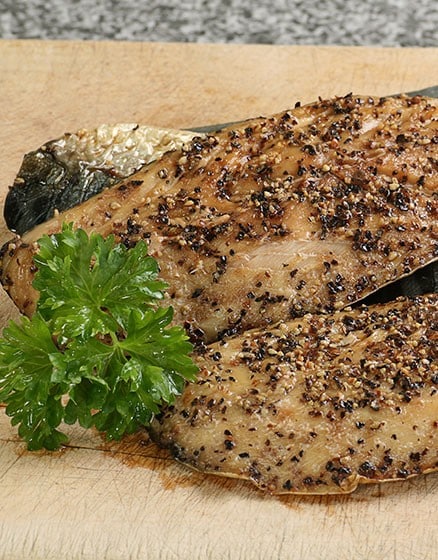
Smoked and cured mackerel fillets are a different category of work, so treat them that way. On the live category, frozenfish.direct lists smoked mackerel fillets alongside raw fillets, and one smoked peppered line is described as boned, skinless, vacuum-packed, and ready to eat; that means the handling expectation is not “cook it like raw fish” but “serve cold or warm gently if the product details support it.” Overcooking smoked or cured fillets can make them feel dry, tight, and overly salty, so use light heat and short contact if you warm them at all. The right doneness cue here is not aggressive flaking but supple texture, clean slices, and smoke that still tastes rounded rather than harsh.
Nutrition Snapshot
Mackerel fillets are bought for flavour and practicality first, but they also bring the kind of nutritional profile people usually associate with oily fish. In broad terms, mackerel is commonly chosen because it provides protein and naturally occurring fats, including omega-3 fats, while still feeling like proper food rather than something clinical or “functional”. The NHS classifies mackerel as an oily fish, and general UK guidance is to include fish in a balanced diet, with one portion a week coming from oily fish. (nhs.uk)
That said, nutrition is not one fixed number across a whole category. Nutrients vary by species, cut, and whether the product is wild or farmed, raw or smoked, plain or flavoured. Smoking, curing, seasoning, and pack style can all change the final eating profile, which is why the sensible way to shop is to treat the product details as the final word for that specific line. On the live Frozen Mackerel Fillets category, frozenfish.direct carries a mix of raw and smoked formats, so it makes sense to keep the nutrition message broad and the buying decision product-specific.
There is also a practical kitchen link between nutrition and eating quality. Mackerel’s richer, oilier flesh is part of what gives it that distinctive texture on the plate: a juicy centre when handled well, a softer flake than lean white fish, and a little more forgiveness in cooking, especially with fattier cuts. That does not mean every fillet behaves the same. A raw fillet, a smoked fillet, and a flavoured smoked fillet will each bring their own balance of texture, fat feel, and use case.
So the most useful nutrition view is a calm one: mackerel fillets can fit comfortably into a balanced diet, and the right choice depends less on wellness slogans and more on the exact product, the cut, and how you plan to cook or serve it. Check the product details, buy for the result you want, and let the format do its job.
Provenance and Responsible Sourcing
The sensible way to talk about provenance is not to make one sweeping claim for everything in the freezer. We show method and origin details per product so you can choose what fits your preferences. That means the useful facts live at SKU level: whether an item is raw, smoked, cured, wild or farmed where applicable, and where the origin information is available on the product details. On the live Mackerel Fillets category, frozenfish.direct currently lists a mix of raw and smoked fillet products, and the broader frozen mackerel range is described as one that may include both wild and farmed mackerel items alongside speciality formats.
That is the right frame for buying fish online. A raw fillet and a smoked fillet are not the same decision, even when they sit under the same mackerel umbrella. One may suit pan or oven cooking, another may be ready for cold serving or gentle warming, and another may be chosen because the prep style is already done for you. If this category includes farmed Mackerel Fillets, wild Mackerel Fillets where stocked, or speciality lines, the practical point is the same: read the product details for the exact method and origin rather than assuming the whole category works to a single sourcing story.
- Provenance supports preference. Clear labels support trust. Evidence supports claims.
- Method changes use. Origin changes context. Product details change confidence.
- Bounded claims stay honest. SKU facts stay useful. Guesswork stays out.
That is why this section should stay evidence-led. If a product is wild, farmed, smoked, cured, or tied to a particular origin, say it on that product. If origin or catch area varies, keep the category copy broad and let the item page do the precise work. This is not about virtue signalling. It is about giving shoppers enough real information to buy according to their own priorities—flavour, format, prep level, origin, or method—without padding the page with claims that cannot be guaranteed across every pack.
Frequently Asked Questions
Is frozen mackerel fillets as good as fresh?
“Fresh” and “frozen” are not really opposites. The more honest comparison is time and handling versus a locked-in point in time. Fresh fish can be excellent, but it keeps moving through the supply chain: landing, packing, chilled transport, storage, display, and then finally your kitchen. Frozen fish works differently. It is processed, frozen, and then held stable, so the quality you buy is tied to that earlier moment rather than to however many days have passed since the catch. On the live Frozen Mackerel Fillets category, frozenfish.direct makes that argument plainly and says its fish is filleted, packed and frozen within 3 hours of being caught.
So, is frozen mackerel fillets as good as fresh? In many real kitchens, it can be the more reliable choice. Not because fresh is “bad”, and not because frozen is magic, but because consistency matters. Mackerel is an oily fish, and oily fish shows handling mistakes quite quickly. If frozen fish is packed well and thawed properly, you keep much more of the texture and flavour people actually care about. If it is mishandled, you can get the problems shoppers complain about: a slightly watery feel, softer flesh, and more moisture loss than you wanted. Good packaging and calm defrosting protect quality; rough handling is what usually lets it down.
That is also where the frozenfish.direct model helps. The site’s delivery page states that orders are dispatched by overnight carrier, packed with dry ice in a polystyrene box, and handled in a way designed to ensure the fish is still frozen when it arrives. That matters because the whole point of frozen mackerel fillets is predictability: freeze at the right moment, hold that condition, and then let the customer take over with controlled storage and defrosting at home.
The best choice depends on how you plan to use it. Portions make the most sense for quick midweek meals, because they are easy to plan and easy to cook without overbuying. Raw fillets for grilling suit shoppers who want stronger heat, cleaner surface colour, and that oily-fish richness straight from pan, grill, or oven. Smoked fillets for entertaining work well when you want something ready for platters, salads, sandwiches, or simple batch prep without extra cooking drama; the live category currently includes raw, smoked, peppered, and lime-chilli-coriander smoked lines.
If you want predictable results, frozen is the easier way to make Mackerel Fillets a routine.
How do I defrost frozen mackerel fillets without it going watery?
Watery mackerel usually comes down to how it thaws, not the fact that it was frozen. As fish freezes, small ice crystals form inside the flesh. If the fillets are then thawed too warmly, too quickly, or more than once, those crystals damage the muscle structure and more moisture escapes as drip loss. That is when the flesh starts to feel soft, wet on the surface, and less clean in texture than it should. Repeated thaw-and-refreeze cycles make that worse, because each cycle gives the fish another chance to lose structure and shed moisture. The Food Standards Agency’s guidance is to defrost food in the fridge, keep it contained, and use packaging guidance as your main reference point. (Food Standards Agency)
The best working method is simple. Defrost Frozen Mackerel Fillets in the fridge as your default. Keep the fish contained so any liquid stays controlled, and if the product is vac packed, leave the packaging intact while it thaws unless the on-pack instructions say otherwise. Once thawed, open the pack, drain away any released liquid, and pat dry well before cooking. That one small step matters more than people think: a dry surface cooks more cleanly, colours better, and feels less watery on the plate. If the fillets are skin-on, drying the skin properly also helps it tighten and finish better in the pan. (Food Standards Agency)
Different cuts behave differently. Portions are usually easier because they are smaller, more portionable, and tend to thaw more evenly. Thick fillets need a little more patience, because the centre can still be holding chill while the outside already feels soft. Steaks behave differently again because of the bone structure and shape: they often hold together well, but the middle can lag behind the outer edge, so even thawing matters. If a product is pin-boned, that changes prep expectations, not the defrost principle: steady thaw, contained handling, dry surface.
If you are short on time, cooking from frozen can work as a backup for some products, but it is a different method and worth treating separately rather than rushing a bad thaw. The key point here is that a calm fridge defrost gives you the best shot at keeping firmness, clean flake, and less surface wetness. Good defrosting is texture control. (Food Standards Agency)
Wild vs farmed mackerel fillets — what should I choose?
Both wild and farmed Mackerel Fillets can be excellent. The better choice is usually not about abstract “better” or “worse”, but about what you like to cook, how rich you want the fish to feel, and how much consistency you want from pack to pack. On frozenfish.direct, the practical rule is simple: product details show whether an item is wild or farmed and where it comes from, so you can buy on specifics rather than assumptions. On the live Mackerel Fillets category, the current range includes raw fillets plus smoked and flavoured smoked fillets, and the wider frozen mackerel range is presented as one that may include both wild and farmed mackerel items, plus speciality lines where stocked.
In broad terms, wild mackerel may give you a slightly firmer bite, a more pronounced fish flavour, and a little more variation from one fish to another. That variation is not a flaw; it is simply part of dealing with a wild catch. Farmed mackerel fillets may appeal to buyers who want a more even, consistent eating pattern from pack to pack, especially when they are planning repeat meals and want less variability. Fat level, firmness, flavour intensity, and price can all differ between wild and farmed products, but those are tendencies rather than rules, which is why the product page matters more than a blanket category statement.
The cooking decision usually matters more than the label debate. If you want a fillet for a hot pan, grill, or oven, think first about how much heat the cut can take and how rich you want the finished result to feel. Mackerel’s oilier flesh often rewards a gentler finish, especially once the surface has taken colour, because that helps keep the centre juicy rather than pushing it into dryness. If you are serving with sauces, a richer fillet can stand up well to sharper, brighter accompaniments, while a firmer fillet can feel cleaner and more direct on the plate. Smoked or speciality lines have different handling expectations again, so those should always be bought by the exact product details rather than by origin alone.
Provenance supports preference. Clear labels support trust. Evidence supports claims. That is the useful way to think about it. If the page includes wild Mackerel Fillets items, farmed Mackerel Fillets items, or speciality lines, treat each one as its own cooking and buying decision. Choose by cooking method first, then by origin and method.
Which mackerel fillets cut should I buy for my plan?
The easiest way to choose Mackerel Fillets is to start with the plan, not the fish jargon. On the live category page, frozenfish.direct currently lists one plain raw option—Mackerel Fillets 900g—plus three smoked styles: Smoked Mackerel Fillets 1kg, Smoked Peppered Mackerel Fillets 1kg, and Lime chilli and coriander smoked mackerel fillets 1kg. That means the category already splits quite neatly into two buying moods: cook-from-raw and serve-cold or warm-gently.
For weeknight meals, portions or portionable fillets are usually the smartest choice. They are easier to size up for one or two people, quicker to get into the pan, and simpler to repeat without overthinking. If you are working from the current range, the plain raw Mackerel Fillets 900g is the most flexible “midweek” buy because it gives you a neutral starting point for oven or pan cooking without locking you into a smoked flavour profile.
For grilling, go towards raw fillets where available, especially if you want stronger surface colour and that richer, more direct oily-fish finish. This is where thickness becomes one of your biggest outcome levers: thicker fillets give you a bit more tolerance before the centre dries out, while thinner pieces need faster, more watchful cooking. Skin is the other big lever. Skin-on fillets tend to give you a more structured feel and a better chance of crisping, while skinless fillets are often easier to portion and serve cleanly.
For entertaining, smoked fillets are the easier answer. They are already flavour-led, easier to portion for platters, and better suited to salads, sandwiches, grazing boards, and make-ahead prep. In the current range, the smoked, peppered, and lime-chilli-coriander lines all fit that role well because they are built around ready-to-serve flavour rather than heavy cooking intervention. For special occasions, smoked or cured-style mackerel lines are usually the most purpose-built choice because they feel more finished and more specific in use
For prep-it-yourself cooking, larger plain fillet packs are the best fit because they let you trim, season, and portion to your own preference. If you only buy one thing, make it the plain raw Mackerel Fillets 900g. It is the most adaptable option on the page: useful for a hot pan, steady oven cooking, or a simple grill plan, and it lets you decide the final flavour direction yourself. Pick the cut that matches your heat source and your timing.
Can I cook mackerel fillets from frozen?
Yes, often you can — but method matters. Cooking Frozen Mackerel Fillets straight from frozen can work well when you need dinner to move faster than your defrost plan, but the result depends on two things more than anything else: thickness and surface moisture. A thin fillet heats through relatively evenly, while a thicker piece can still be cold in the centre by the time the outside has coloured. And if the surface is carrying frost or loose ice, that moisture gets in the way of browning and makes a hard sear much less clean. That is why oven cooking, air-fryer cooking, or a gentler covered-pan start can be more forgiving than throwing a frozen fillet straight into fierce heat and hoping for the best. The live category currently includes plain raw fillets as well as smoked lines, so the “cook from frozen” approach makes most sense for the raw products; smoked or speciality products should always be handled according to their own product details.
A practical approach is simple and does not need chef theatre. Take the fillets out of all packaging first. If there is obvious surface ice, rinse it off briefly if needed, then pat dry well so you are not steaming the outside before the fish has even started to cook. Begin with gentler heat so the centre has time to thaw and warm through, then finish a little hotter if you want extra colour on the outside. In a pan, that might mean starting more calmly than you would with a fully thawed fillet, then increasing the heat towards the end. In the oven or air fryer, it means treating thickness as the main variable and adjusting according to the pack guidance and how the fillet looks and feels rather than chasing one rigid time. Food safety guidance also supports using pack instructions as the lead reference for frozen products. (Food Standards Agency)
There are times when it is better not to cook from frozen. If you have a very thick piece and your goal is a really precise, restaurant-style sear, defrosting first will usually give you better control. The same goes for speciality cured-style products or lines with different handling expectations: those should follow the product guidance rather than being treated like a raw grill fillet. For a straightforward weeknight cook, though, frozen-to-cooked can be perfectly workable if you respect moisture, thickness, and heat. Frozen-to-oven is the weeknight cheat code when you need Mackerel Fillets now.
How long does frozen mackerel fillets last, and how do I avoid freezer burn?
Frozen Mackerel Fillets can stay safe for a long time in the freezer, but quality is not frozen in place forever. That is the real distinction to keep in mind. Freezing is very good at slowing spoilage, but texture, flavour, and surface condition can still decline if the fish is poorly wrapped, exposed to air, or left in a freezer that warms and cools too often. That is why the best answer is not “it lasts exactly X months”; it is follow the on-pack storage instructions and treat quality as something you actively protect. Public food-safety guidance makes the same point: freezer storage is primarily a quality question once food is kept properly frozen, and freezer burn is a quality issue rather than a sign that food has suddenly become unsafe. (U.S. Food and Drug Administration)
Freezer burn is what happens when frozen food loses moisture because of air exposure and dehydration. It often shows up as dry patches, dull or greyed-looking areas, and a tougher, less satisfying texture once cooked. With fish, that can mean a fillet that looks tired, feels less supple, and eats a little drier than it should. The flavour may flatten too, not because the fish is “off” in the dramatic sense, but because the surface has been slowly damaged by cold, dry air. (U.S. Food and Drug Administration)
The practical prevention is refreshingly unglamorous. Keep packs sealed. Minimise air exposure. Store them flat where you can, so the fish freezes and holds evenly. Rotate stock so the older packs move forward and get used first. Keep the freezer stable rather than constantly opening, shifting, and rehandling things. If a seal is broken, rewrap tightly or move the fillets into a freezer-safe bag with as little trapped air as possible. On the frozenfish.direct mackerel range, the site explicitly notes that many mackerel products are vacuum packed, and that this helps by reducing air contact around the fish. One smoked peppered mackerel fillet line is also described as being packed in contemporary vacuum packaging.
So the calm rule is this: keep Frozen Mackerel Fillets properly wrapped, properly frozen, and sensibly rotated, and rely on the pack guidance for the final storage call. Good packaging and steady cold are what keep Mackerel Fillets tasting like Mackerel Fillets.